SEO for Industrial Manufacturing: 8 Tips to Outrank the Competition
The Basics of SEO for Industrial Companies Industrial SEO improves a manufacturing brand’s visibility in search engines so that qualified buyers can find your products. When a website ranks for relevant industrial keywords, search engines are more likely to connect that site’s business with high-intent users. Strong search visibility also helps manufacturers generate qualified leads \[…\]
The Basics of SEO for Industrial Companies
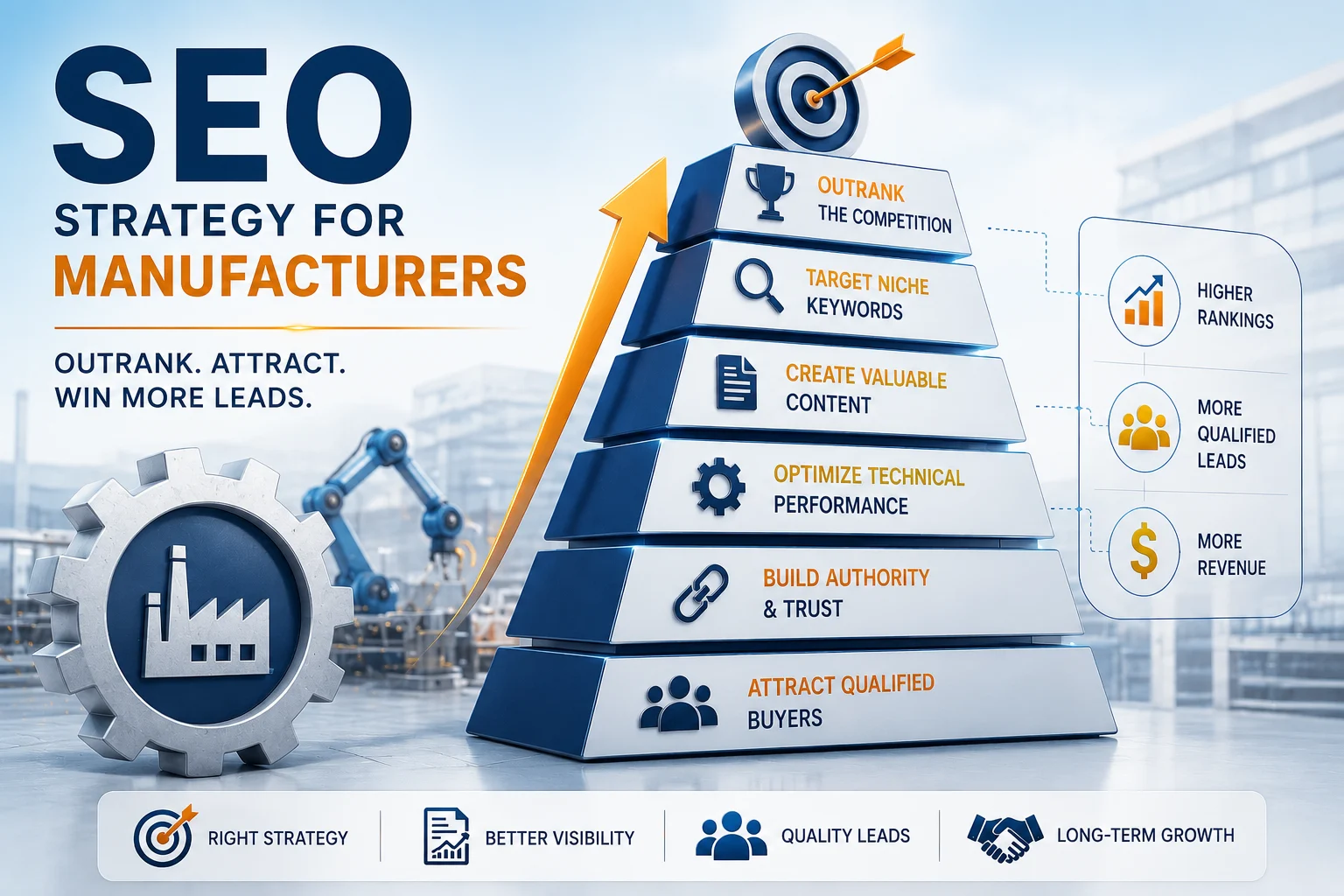
Industrial SEO improves a manufacturing brand’s visibility in search engines so that qualified buyers can find your products. When a website ranks for relevant industrial keywords, search engines are more likely to connect that site’s business with high-intent users. Strong search visibility also helps manufacturers generate qualified leads and build authority through the long buying process.
How Industrial SEO Is Changing With AI Search
Industrial buyers no longer search in just one way. A buyer may start with a broad search but then move into related searches around materials, applications, industries, capabilities, vendors, comparisons, and technical requirements. Search engines and AI tools may also evaluate multiple related searches and sources before deciding which companies to show, cite, or recommend.
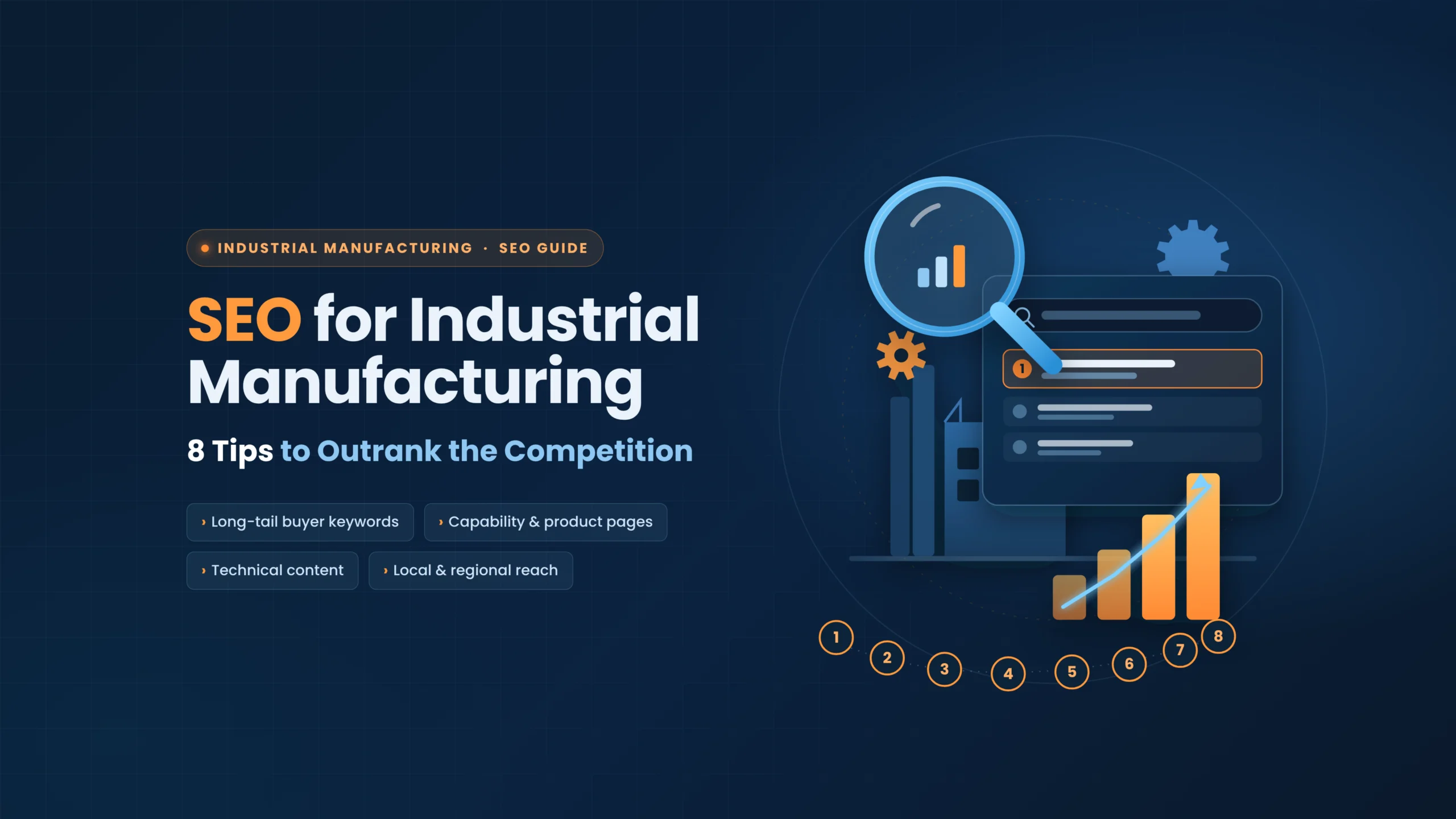
8 Industrial Manufacturing SEO Tips to Outrank the Competition
1. Understand the Related Searches Industrial Buyers Use
AI-powered search engines may fan out a user’s query into multiple adjacent searches before synthesizing an answer, which means that one core industrial keyword can expand into many related buyer searches. For example, a buyer may search by service, product type, material, industry, application, location, certification, or comparison. Industrial SEO should start by mapping these related searches before creating pages.
2. Target Long-Tail Industrial Keywords With Buying Intent
Industrial keywords often have low volume but high value. The goal is not just to chase search volume, but to target specific searches that reflect real buyer needs, technical requirements, or vendor evaluation. Targeting the right long-tail industrial keywords will increase the number of qualified buyers to your site.
3. Build Product, Service, and Capability Pages Around Those Searches
Each important buyer search should map to a clear page. This can include product pages, service pages, capability pages, application pages, material pages, or industry pages. The page should be both specific enough to rank and useful enough for a buyer or AI search and answer system to understand what the company does.
4. Make Pages Specific to Materials, Applications, and Industries
Part of industrial SEO is creating industry-tailored pages specific to the materials and applications that your business offers. Technical buyers search for specialized processes, specifications, and materials that traditional SEO strategies will naturally fail to target. You need to create relevant content that buyers actually want to read.
5. Create Helpful Technical Content That Supports Buyer Evaluation
Educational content is a uniquely important part of industrial manufacturing SEO. Articles, guides, case studies, comparison pages, and other technical resources need to be created so that buyer questions are answered at each stage of the research process. Helpful technical content improves search visibility but also qualified lead generation.
6. Optimize Priority Pages Around Buyer Search Intent
Product and service pages should be heavily optimized around buyer search intent. These priority pages need to align with the specific information that industrial buyers are looking for at every stage of the research process. Well-optimized pages will provide information that actually answers research questions while organically incorporating targeted keywords.
7. Strengthen Local and Regional Visibility When It Supports Sales
Region-specific landing pages should be built out that target city-specific and state-specific manufacturing keywords. You should also complete a Google Business Profile with an accurate name, address, phone number, hours, and service areas. Submit this information to regional supplier networks and industry directories as well to strengthen local and regional visibility.
8. Build Authority to Pages You Want to Rank and Be Referenced
Your industrial SEO strategy should be centered on supporting extended decision-making and building your brand’s technical depth and topical authority. Doing so will generate quality backlinks from trade publications, industry associations, and supplier directories. Being an authoritative source will teach AI systems to treat your pages as rankable and reference-worthy.
Common Industrial SEO Mistakes to Avoid
Chasing Volume Instead of Relevance
One of the most common industrial SEO mistakes is to just publish more content and chase organic traffic of any kind. However, this strategy will likely lead to low-quality lead generation. Focusing on relevance with long-tail industrial keywords is more likely to draw in industrial buyers that might actually buy your product or service.
Publishing Generic Content Instead of Technical Content
Another common mistake is to publish generic content that improves the basic visibility of your site. Technical content like articles, guides, and comparison pages will both improve your visibility and actually help attract and convert qualified leads. Buyers need their questions answered throughout the research process, and technical content will help your brand stay competitive until conversion.
Treating B2B Industrial SEO Like B2C SEO
When you are designing your SEO strategy, you should focus on B2B-specific strategies. Traditional B2C SEO works differently because selling directly to customers involves a much simpler and shorter decision process. B2B buying processes are long and research-focused, so industrial SEO needs to reflect that.
Ignoring Lead Quality When Measuring SEO
When measuring SEO, you should never ignore lead quality. High levels of organic search traffic can mislead industrial manufacturers into thinking that their current strategy is working. However, they will then be mystified when it becomes clear that high visitor volume is not leading to higher conversion rates.
Industrial SEO FAQs
What is industrial SEO?
Industrial SEO is the process of optimizing manufacturing and B2B websites so that they rank higher in search engine results when procurement managers, engineers, and plant operators search for specific materials, parts, processes, and industries.
How can industrial manufacturing companies improve SEO?
Industrial manufacturing companies can improve SEO by understanding buyer intent, targeting long-tail industrial keywords, building product and service pages around those searches, and creating technical content that actually answers buyer questions through the research process.
How long does industrial SEO take to work?
Most businesses will see results within three months of first implementing industrial-specific SEO strategies. These effects will also significantly compound over time as your brand improves its topical authority, rises in the search rankings, and continues to publish relevant content.
Is SEO better than PPC for industrial companies?
No, SEO and PPC are both useful for industrial companies. PPC delivers immediate visibility so that you can test keywords, but SEO builds long-term organic authority, higher click-through rates (CTR), and sustainable organic traffic. The best B2B marketers will utilize both SEO and PPC as part of their strategies.