AIO Citation Optimization for Engineering Firms
One of the biggest changes in marketing over the past five years is how artificial intelligence shapes how potential clients perceive your brand. More and more each day, engineers and procurement officers are turning to tools like ChatGPT, Claude, Gemini, and others to find real-time answers and research products and services.
One of the biggest changes in marketing over the past five years is how artificial intelligence shapes how potential clients perceive your brand. More and more each day, engineers and procurement officers are turning to tools like ChatGPT, Claude, Gemini, and others to find real-time answers and research products and services.
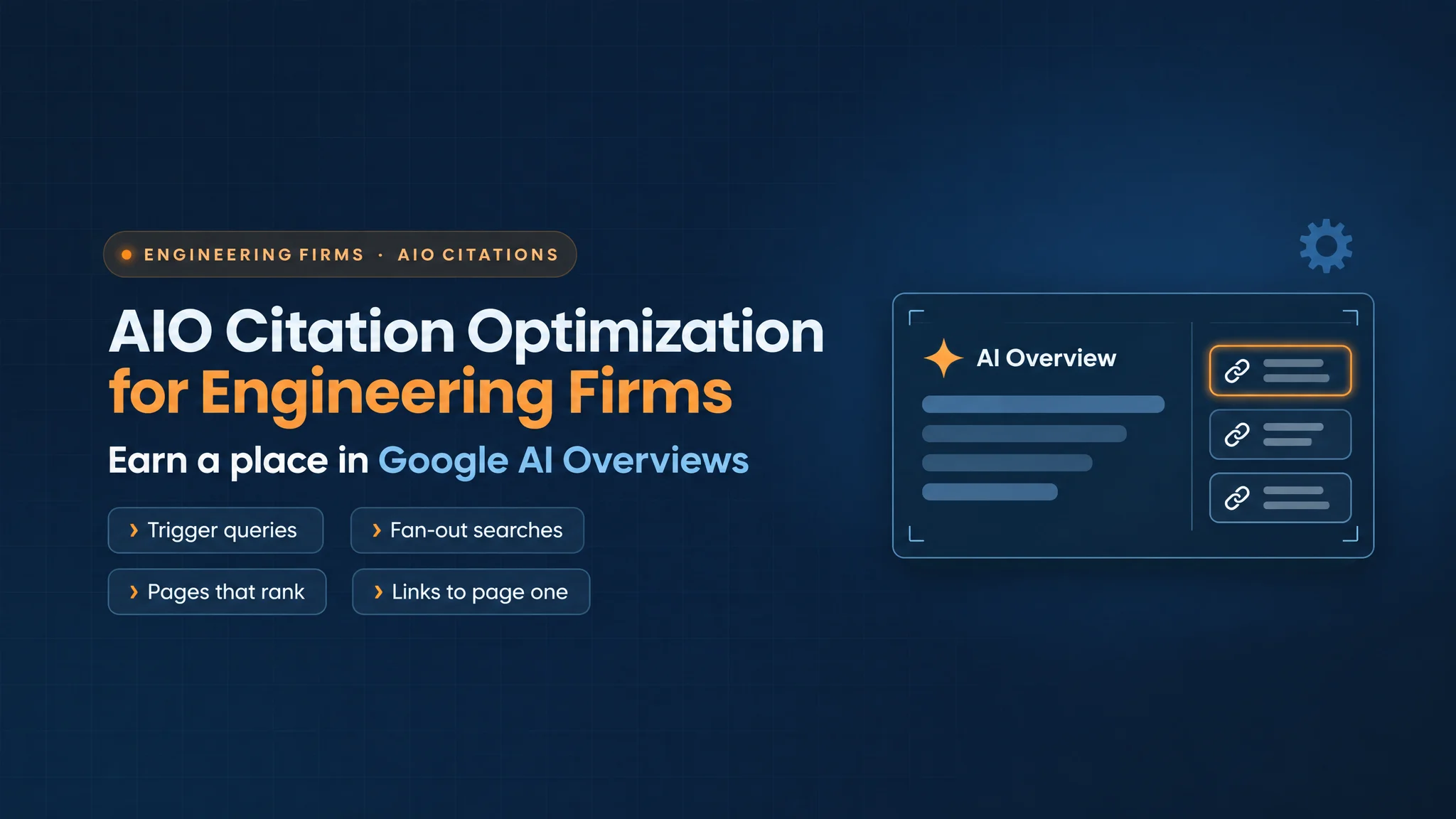
One of the most important places to be visible is in Google AI Overviews, which is the AI-generated answer block that sits above blue-link results. Google AI Overviews build answers from pages that rank for related searches. If your page isn’t cited, you’re invisible in the AI answer even when you rank in traditional search results.
This guide covers what AIO citations are, how to measure them, and how engineering firms can earn them. If you need to increase your visibility in AI overviews or want to learn more about AI citation optimization, stay here to learn more.
What Are AIO Citations?
When people talk about ranking in AI Overviews (AIOs), they really mean being cited or being linked inside of an AI-generated answer, not just being named in it. An AIO citation is when an AI system, like Google Overviews, references your page or brand as a source in the answer it generates. The advantage of an AIO citation is that when your brand is cited in these results, your brand and content will be picked up for other AI tools, like ChatGPT, Perplexity, and Claude. This means your brand will be named in generated answers even when users don't click or directly search for your services.
Where AIO Citations Come From
Google’s AIOs often pull from organic search results. That is, traditional SEO, such as page crawlability and publishing authoritative, citation-worthy content, can give you the best odds of getting AIO citations. The better you rank, the more chances you have to improve your AIO. For instance, Position 1 in Google’s SERP rankings is cited about 1 in 4 times in AIO citations.
However, you do not need a top 10 ranking to get AIO citations. While high rankings can increase your odds of being cited, it doesn’t guarantee it. Furthermore, 57% of citations come from pages that are outside of the top 10. This happens through fan-out queries, which are techniques AI models use to retrieve information.
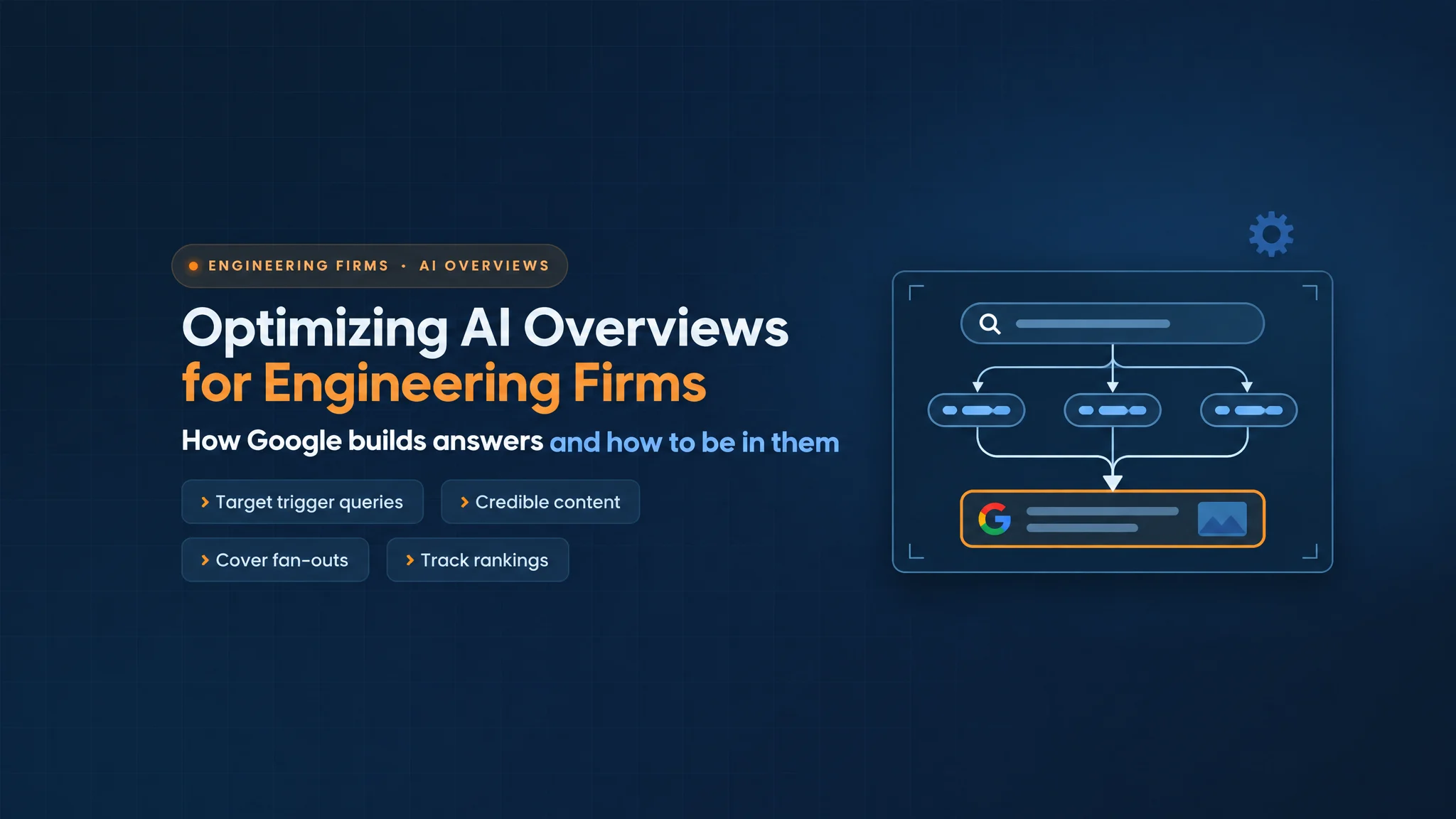
For many AI prompts, one query actually is split into a dozen or more sub-queries, which are then combined to generate the answer you see in the AIO. As such, you can also get AIO citations through building content that fully and credibly covers a topic. This is because AI models pull from more than the top 10, and if you can comprehensively answer user questions along with ranking highly in search results, you can increase your chances of being cited.
How Engineering Firms Earn AIO Citations
1. Pick the queries that trigger AI Overviews
Before you start optimizing, identify the prompts and queries you want to appear for. This means looking at where you want to appear and the kinds of questions your potential buyers are likely to ask. This is especially important for engineering firms because most have specialized capabilities, and the engineers and procurement officers looking for them have very specific questions and qualifications.
2. Identify the fan-out searches behind them
AI search engines turn single queries into multiple sub-queries to generate results. Once you pick out the queries that trigger AI Overviews, identify the fan-out searches behind them. Figure out what additional questions would need to be addressed to provide a comprehensive answer.
3. Check which pages rank and get cited for those fan-outs
You should also take a look at the pages that rank in these fan-out searches. What are these pages doing to address the original query, how is the information extracted to address the original query, and how do they show that these responses are needed for a comprehensive AI-generated answer? Are these pages more current? Do they have more authoritative signals? Are these pages extractable for AI models? All of these questions matter for dissecting how these pages address these sub-queries and how they show up in the final generated answer.
4. Build or strengthen pages to rank for those fan-outs
Once you have identified the query fan-outs and how others have addressed them, the next step is to make sure that your website has the necessary pages that can answer and rank for the queries you are interested in appearing in. If you don't have the pages or content, you will need to create them. If you already have content on these topics, check how current it is, how authoritatively it answers the question, and whether the information is structured in a way that is easy for machines to understand.
5. Build links to push those pages onto page one
It will not be enough to just create pages with the relevant information. You will also need to build links to drive traffic onto one page. Link building matters because AI models favor brands and pages that appear consistently and are contextually relevant. You can optimize for this by signaling that your page is relevant to address certain prompts. This will not only help AI models look at your pages to generate answers, but it will also increase your visibility on traditional search engines.
How to Measure AIO Citations
To track your AI visibility and performance over time, identify key metrics. One important metric is your AI citation percentage. This measures how often a specific brand, URL, or source is cited when you run the exact same prompt multiple times. AI citation percentages can fluctuate over time, so run repeated checks to get an accurate picture of your performance and where you need to improve.
Another key metric to keep in mind is your AI visibility percentage. This score summarizes how often and how well your brand appears in AI-generated responses. Higher visibility means more AI models recognize and mention your brand when relevant topics are discussed, increasing your overall brand presence in AI-generated content.
Conclusion
Being cited and appearing in AI-generated answers is becoming more important every day. This is where potential clients look for you and decide whether to choose you or your competitors. By optimizing your pages to appear in AI overviews, such as Google AI Overviews, you will increase your chances of being visible when clients are looking for you and being seen as an authority in your industry, which is important for the clients you intend to reach.
If you have questions or want to discuss increasing your visibility in AI overviews, talk to Zupo.